Fehu
Fehu can prompt reflection on resources, value, prosperity and how wisely something useful is being managed.
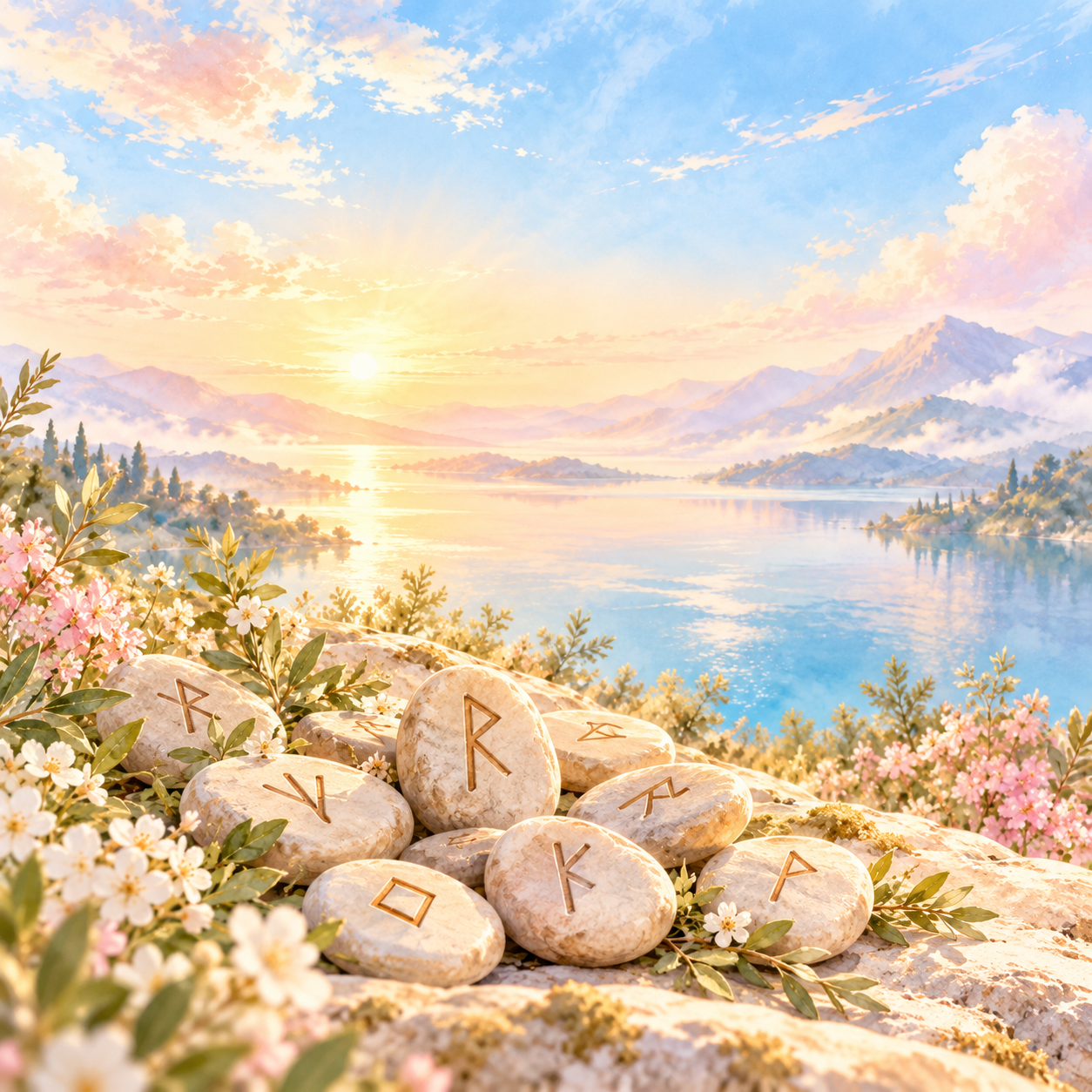
Explore the 24 symbols of the Elder Futhark, their traditional associations, historical names and the reflective themes commonly connected with them today.
The Elder Futhark is the oldest widely recognized runic alphabet. Its name comes from the sounds of its first six runes: F, U, TH, A, R and K. Each rune represented a sound, and reconstructed rune names also carried word associations.
The alphabet is traditionally arranged in three groups of eight runes, often called aettir. Open Sky Readings uses the complete 24-rune set in its Daily, Single and Three-Rune readings.
Search by rune name or a theme such as strength, change, communication, growth or clarity.
Fehu can prompt reflection on resources, value, prosperity and how wisely something useful is being managed.
Uruz emphasizes resilience, physical or personal strength and the capacity to meet demanding circumstances.
Thurisaz can suggest powerful circumstances and the importance of pausing before responding impulsively.
Ansuz draws attention to language, learning, listening and the information exchanged between people.
Raidho can represent purposeful movement, rhythm and choosing a direction rather than simply moving quickly.
Kenaz represents illumination, knowledge, craftsmanship and seeing something more clearly than before.
Gebo centers on reciprocity, generosity and the balance between giving and receiving.
Wunjo is connected with happiness, harmony, belonging and recognizing what genuinely supports wellbeing.
Hagalaz represents disruptive circumstances that may interrupt familiar patterns and require adaptation.
Nauthiz can highlight limitations, necessities and the persistence required to work within real constraints.
Isa reflects stillness, delay and periods when movement may temporarily slow.
Jera represents cycles, gradual development and results that emerge from sustained effort.
Eihwaz is commonly associated with endurance, resilience and maintaining stability through transition.
Modern interpretations often connect Perthro with uncertainty, possibility and circumstances that cannot yet be known.
Algiz is commonly associated in modern rune practice with protection, awareness and maintaining healthy boundaries.
Sowilo represents sunlight, energy, illumination and a clearer sense of direction.
Tiwaz is associated with courage, justice, responsibility and principled action.
Berkano is associated with growth, beginnings, renewal and something that benefits from patient care.
Ehwaz reflects movement, cooperation, partnership and progress built on trust.
Mannaz can prompt reflection on self-awareness, community and your relationship with other people.
Laguz reflects water, flow, emotional awareness and adapting to changing conditions.
Ingwaz is commonly connected with developing potential, completion and something growing before it emerges.
Dagaz represents daylight, transition and the shift from one state or perspective into another.
Othala can prompt reflection on ancestry, family, inherited values and the foundations that helped shape you.
The approximate pronunciation guides on this page are intended to help readers recognize the names. Elder Futhark rune names are reconstructed from historical linguistic evidence, and modern sources may pronounce or spell some names differently. Those variations do not change the symbol displayed for each rune.
Open Sky Readings presents rune information for historical interest, personal reflection, inspiration and entertainment. Modern interpretive meanings can vary between traditions and authors. Rune readings do not guarantee future events and should not replace professional medical, mental health, legal or financial advice.
